
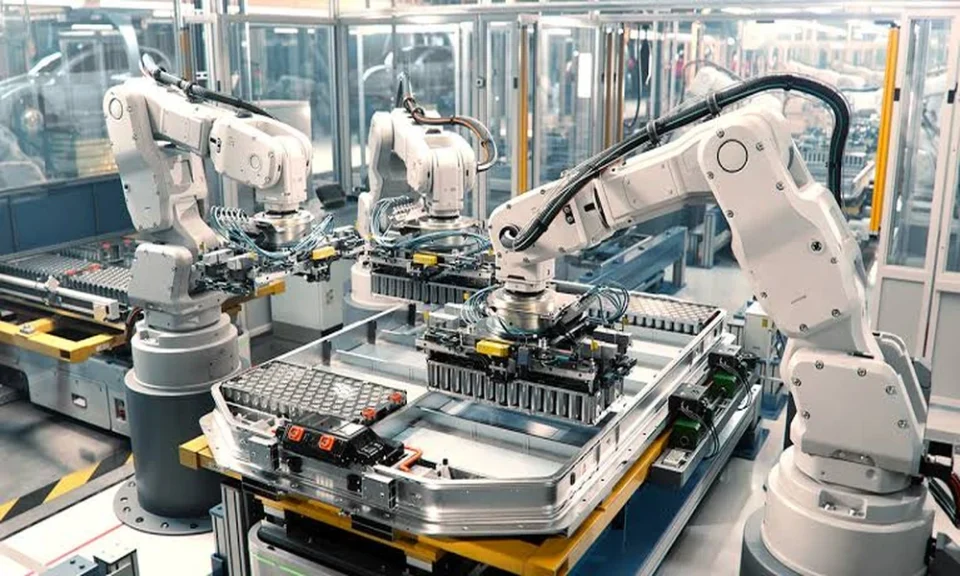
One operator can support several CNC machines only when the production system is redesigned around supervision rather than constant attendance. A robot can remove the repeated loading deadline, but it also creates new work in replenishment, inspection, alarm handling and cell recovery. The useful staffing ratio therefore comes from measured workload across the shift, not from the number of machines that can physically fit around one person.
Cycle time creates the available supervision window
Each machining job has its own rhythm of cutting, part exchange, inspection and tool-related stops. Manual tending forces the operator to return at the end of every cycle, even if loading itself takes less than a minute. Automation decouples that deadline and creates blocks of time that can be used elsewhere. Longer machining cycles provide wider windows, while short cycles require reliable handling and enough buffering to prevent every small delay from stopping the machine.
Material flow becomes the operator’s route
Once loading is automated, the operator spends more time moving between raw-part buffers, finished-part storage, inspection points and alarm locations. The robot handles the repetitive exchange, while the person manages the conditions that keep several cells supplied and recoverable. A poor layout can consume much of the labour that automation was supposed to release, especially if replenishment points are distant or cell status cannot be read from the aisle.
Buffers create flexibility, but they also hide problems
A buffer separates every operator visit from every machine cycle and therefore absorbs timing differences between cells. Its capacity should reflect machining time, inspection frequency and realistic replenishment intervals. Too little buffer creates constant interruptions, while too much increases work in progress and can allow a quality problem to continue for a larger batch before it is noticed. The best design supports supervision without turning the cell into a storage area.
Alarm demand sets the real machine-per-person limit
A cell that runs normally for long periods adds little workload, whereas repeated missed picks or seating errors make multi-machine supervision impractical. In automated machine tending the real staffing limit is therefore set less by nominal robot speed than by how often the operator must intervene and how long recovery takes. During commissioning, teams should measure those interruptions, use messages that describe the physical process condition and preserve a sensible escalation route for maintenance.
Inspection has to be deliberately rescheduled
Manual loading creates frequent natural contact with the part, and automation removes that observation point. First-piece approval, interval sampling, tool-wear checks and responses to drift must therefore be placed deliberately in the production plan. Traceable output locations are useful because they allow material produced since the last confirmed check to be isolated quickly. Human judgement remains valuable for ambiguous surface defects, abnormal sounds and changes that are difficult to express as one sensor limit.
The staffing ratio should emerge from data
A realistic study combines replenishment time, inspection duties, planned maintenance, walking distance and actual alarms. Peaks matter more than averages because two cells can demand attention at the same moment even when their average workload looks low. A successful multi-machine workflow gives the operator enough information and authority to prioritise work before machines stop. Automation makes the arrangement possible, but reliable tooling, diagnostics and disciplined staffing determine how far it can be extended.
Do not optimise staffing before the cell is stable
Reducing headcount around a process too early can hide the real performance of automation because operators spend the shift compensating for immature faults. A better sequence is to stabilise the cell, measure intervention demand and only then redesign staffing around the observed workload. This preserves enough capacity for learning during ramp-up and produces a machine-to-operator ratio based on real production behaviour rather than a target chosen before commissioning.
