
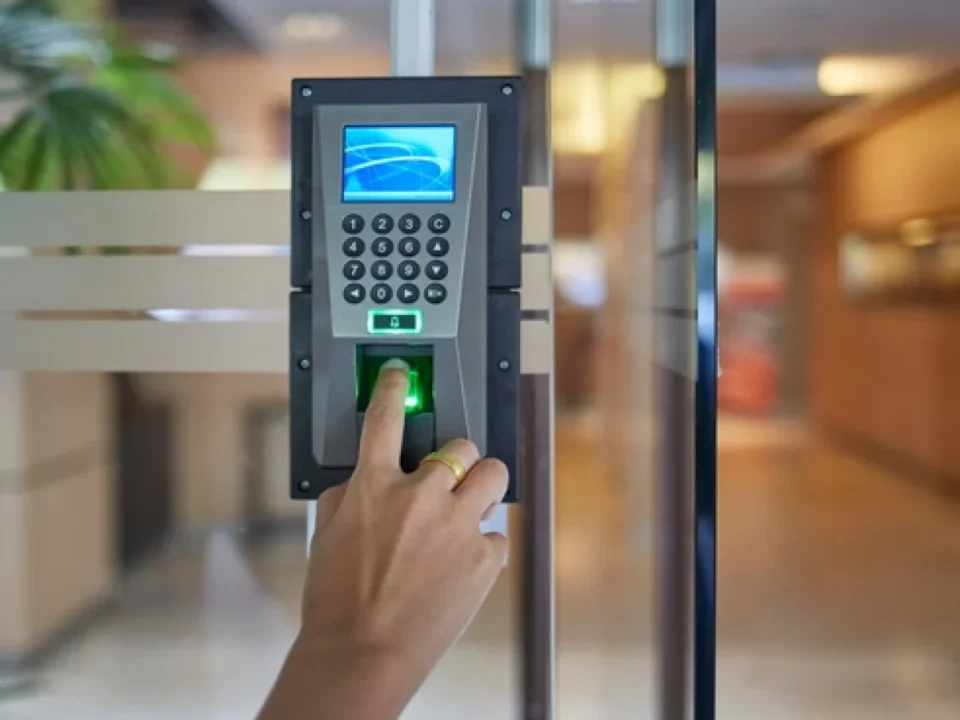
Access control systems are needed by businesses that wish to protect their premises, assets, and sensitive information. The systems regulate entry to restricted spaces in a building or a network so that only qualified individuals can get to restricted areas. The businesses will tend to enhance the security, ease the operation, and comply with various rules and regulations when the relevant access control is enforced.
Learning how access control systems operate
What is an access control system?
Access control system refers to a security measure that enables companies to regulate the access of some premises of a facility. This is achieved by employing both physical and online security, including key cards, biometric scans or passwords. The options of using access control systems include physical access points as well as in computer networks where only authorized users can access them.
Explaining how access control systems work
Access control systems have a number of components that work in conjunction with one another to ensure security. Their mechanism works in the following way:
- Credentials: To gain access, the user is supposed to provide a credential (such as key card, PIN or fingerprint). These credentials are linked to an individual and his or her authorizations.
- Access reader: A reader scans the credential to authenticate who the user is e.g. a card scanner or a biometric sensor.
- Access control panel: It is the control panel that will be fed with the credential information and will be compared with a database to establish whether the user is an authorized user or not.
- Lock or barrier mechanism: When authorization occurs, a lock or barrier (e.g., door lock, turnstile, or gate) is unlocked, and it is then possible to be granted access. If not, access is denied.
Benefits of access control systems for businesses
Access control systems offer a wide range of advantages that lead to physical and digital security. The main benefits to the business are as follows:
- Enhanced security: By limiting access to secure zones, companies can minimize unlawful access to the company and minimize the threat of theft or sabotage.
- Audit trails: This system would be able to trace the activities of some people in some regions and at what time which will be useful in audits and investigations.
- Flexibility: Access control systems enable a business to tailor the permissions of various employees, contractors or guests according to the roles or clearance levels.
- Enhanced convenience: Ease of carrying physical keys has been done away with and businesses can remotely control access by using centralized systems.
- Compliance: In a lot of industries, they have to have access control as a standard to comply with the regulations. Access control systems enable companies to ensure that they are in compliance with security and privacy laws.
Types of access control systems for businesses
Access control systems are of various types which are applicable to different businesses. The most frequent ones are listed below:
- Card based systems: Employees are provided with access cards or fobs to get access to secure places. These are cheap and simple to operate packages for small and medium sized businesses.
- Biometric systems: A more secure system is biometric authentication (fingerprint recognition or facial recognition), which must verify the person, the distinguishing physical trait of a person.
- PIN systems: PIN systems are those systems that do not allow the user to access without entering a PIN code. This is not a secure mode as compared to biometric systems, but it is very convenient.
- Mobile access: employees will be able to open up doors or access systems using their smartphones, which is convenient and flexible.
Finally
The access control systems form the backbone of the businesses that are keen on enhancing the degree of security and efficiency in their operations. Whatever type of access you would favor using: card based access, biometric access, or mobile access, these systems are flexible and scalable to the rising security demands of the business today.


